.svg)

Step 1: Your complaint is acknowledged
Once you submit a complaint:
- Your insurer will confirm receipt
- Your case is logged internally
- A handler is assigned to review it
👉 This usually happens within a few days.
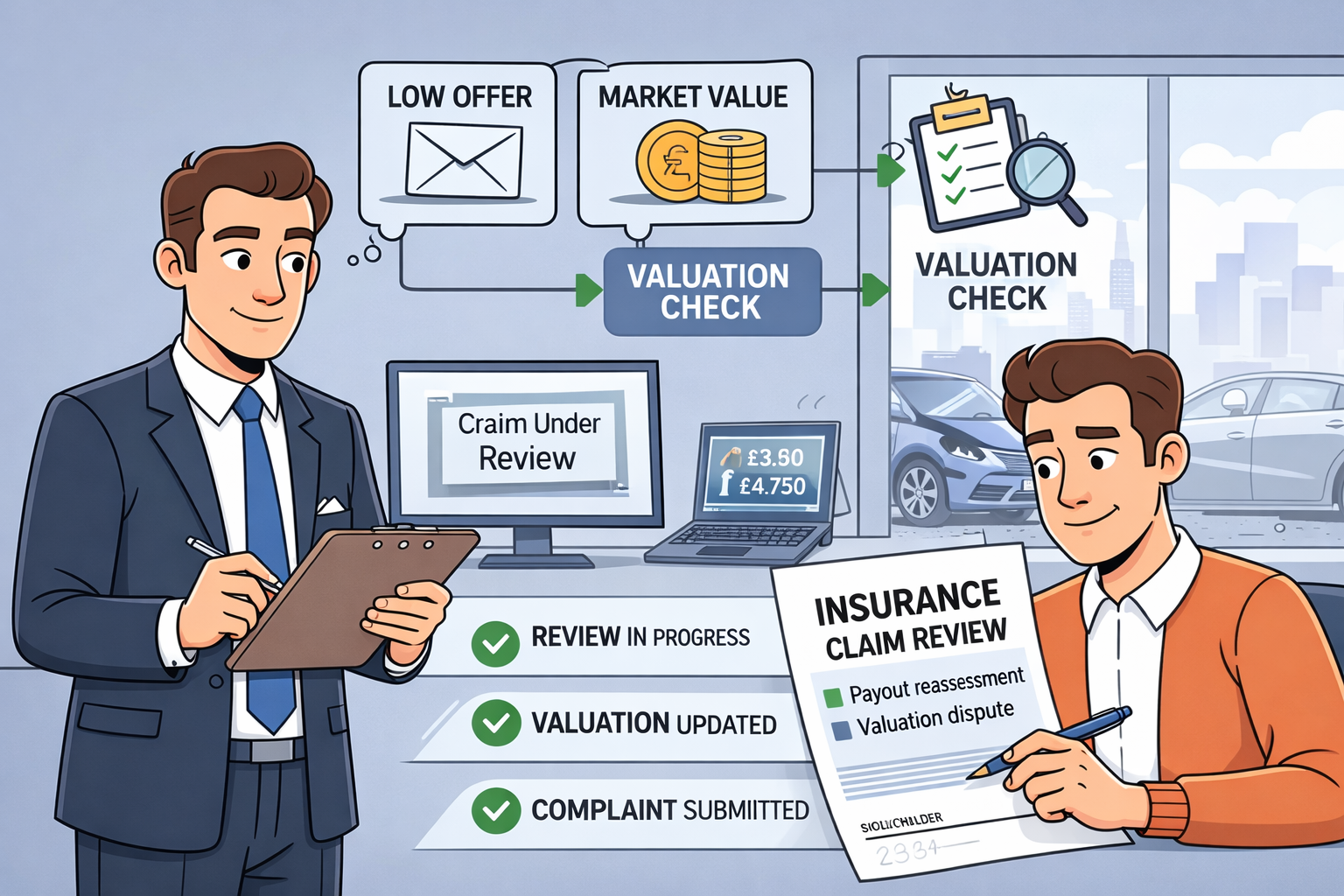
Step 2: The insurer reviews your claim
At this stage, the insurer will:
- Reassess your vehicle valuation
- Review any evidence you’ve provided
- Compare additional market data
👉 This is the key opportunity for your payout to increase.
Step 3: You may receive a revised offer
After reviewing your case, the insurer may:
- ✔ Increase your payout
- ✔ Partially adjust the valuation
- ❌ Reject your complaint
👉 Many drivers receive higher offers at this stage, especially with strong evidence.
Step 4: Final response (within 8 weeks)
By law, insurers must issue a final response within:
👉 Up to 8 weeks
This will explain:
- Their decision
- Whether they accept your complaint
- Any revised settlement offered
Step 5: Escalation to the Financial Ombudsman
If you’re not satisfied:
- You can take your case to the Financial Ombudsman Service (FOS)
- This is free and independent
- They will review both sides and make a binding decision
👉 The Ombudsman often upholds complaints where valuations are too low.
What most drivers don’t realise
Many people stop after the insurer says no.
But in reality:
👉 Some of the biggest increases happen after escalation.
Drivers who persist often recover:
- £500–£1,000 (common)
- £1,000–£3,000 (typical disputes)
- £3,000+ (strong cases)
Where things can go wrong
Challenging a payout isn’t always straightforward.
Common issues include:
- Weak or limited evidence
- Poor-quality comparisons
- Insurers rejecting claims due to lack of detail
- Giving up too early
👉 This is where outcomes can vary significantly.
Why many drivers choose expert help at this stage
While you can handle the process yourself, many people choose support after submitting a complaint — especially if:
Their claim has been rejected
A specialist can rebuild the case with stronger evidence
They want a stronger challenge
Structured, professional submissions often carry more weight
They don’t want the hassle
Back-and-forth with insurers can be time-consuming
They want to maximise their payout
Well-prepared claims often achieve better outcomes
DIY vs expert support — what’s the difference?
✔ Doing it yourself
- Free
- Full control
- Requires time and research
✔ Using a claims management company
- No upfront cost (typically No Win, No Fee)
- Full case handling
- Professional valuation evidence
- Escalation handled for you
👉 For many drivers, it’s the difference between:
- Accepting a small increase
- Or recovering the full amount they’re owed
Is it too late to challenge your payout?
No — in many cases, you can still act even if:
- You’ve already accepted the payout
- The claim was settled months or years ago
👉 Time limits usually apply (up to 6 years in many cases).
Key takeaway
👉 Challenging your payout is often where the real outcome is decided.
What happens next depends on:
- The strength of your evidence
- How the case is presented
- Whether you escalate if needed
Check if your payout could be increased
If your car was written off and your payout felt too low, you could still recover more.
✔ No upfront costs
✔ Quick eligibility check
✔ No Win, No Fee
👉 Start your free check today
Important note
You can complain directly to your insurer and refer your case to the Financial Ombudsman Service for free.