.svg)
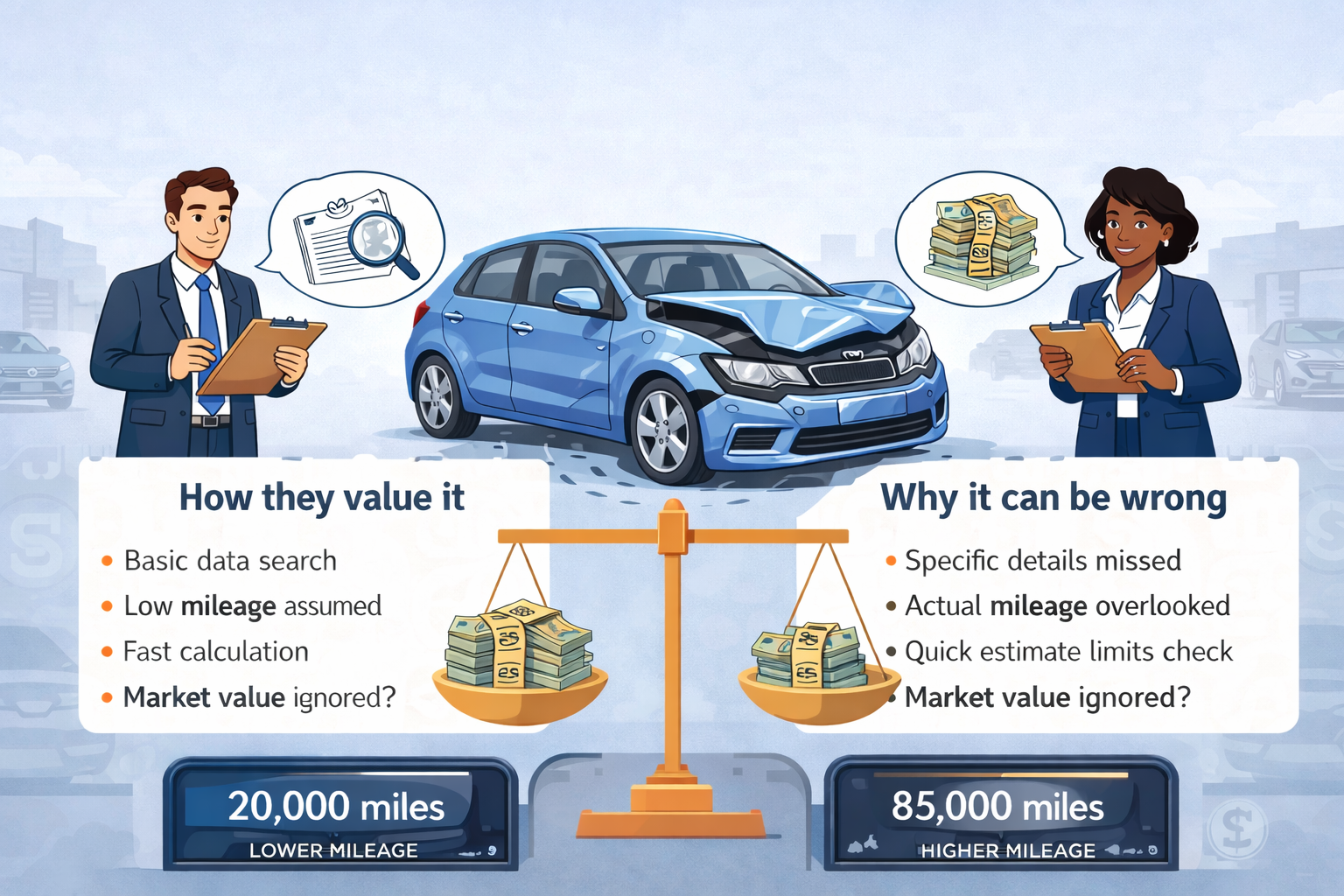

How do insurers calculate a car’s value?
When your vehicle is declared a total loss, insurers aim to pay the market value.
👉 This is defined as:
The price your car would have sold for immediately before the accident.
To calculate this, insurers typically use:
- Industry pricing guides
- Recent sales data
- Vehicle details (age, mileage, condition)
- Specification and history
The main valuation tools insurers use
Most UK insurers rely on trade valuation systems such as:
- CAP (Black Book)
- Glass’s Guide
- Internal insurer databases
These tools estimate the value based on:
- Historical sales data
- Trade prices (what dealers pay)
- Average vehicle condition
👉 But this is where problems can start.
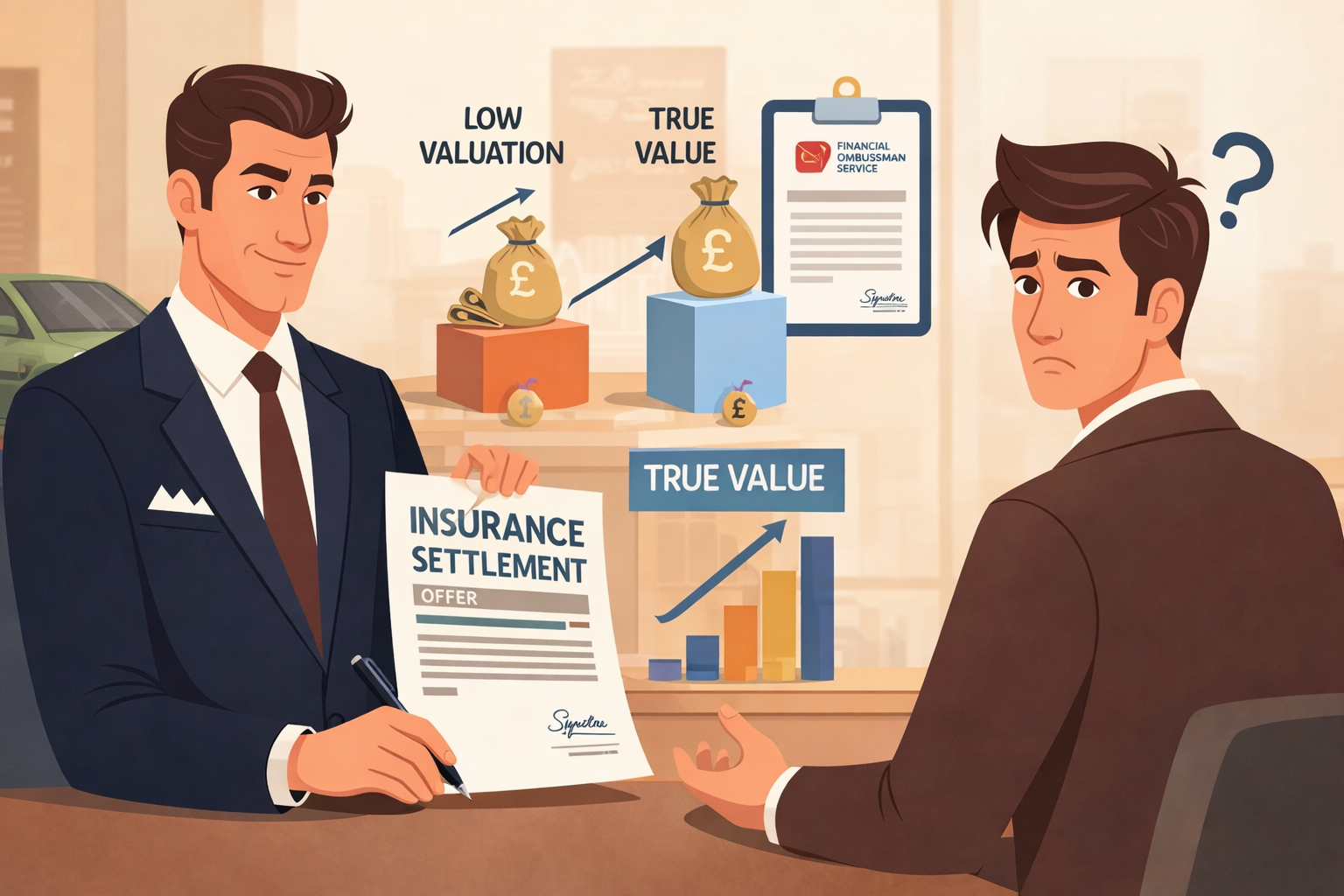
Why valuations are often too low
1. Trade value vs retail value
Valuation guides often reflect trade prices, not what you’d pay as a consumer.
👉 Result: Your payout may be lower than the cost to replace your car.
2. Not enough real-world comparisons
Some insurers:
- Use limited data
- Don’t check enough similar vehicles
- Compare with cheaper or non-equivalent cars
👉 This can reduce your settlement.
3. Vehicle condition is underestimated
Your car may have been:
- Well maintained
- Low mileage
- In excellent condition
But insurers may apply average condition assumptions.
4. Extras and upgrades are ignored
Optional extras like:
- Alloys
- Tech upgrades
- Higher trim levels
👉 These can add significant value but are not always fully included.
5. Outdated or lagging data
Market prices change quickly.
If insurers rely on:
- Older data
- Slow-moving valuation tools
👉 Your payout may not reflect current market conditions.
What does “fair market value” actually mean?
The key principle used by the Financial Ombudsman is:
👉 Could you buy a like-for-like replacement vehicle with the payout?
If the answer is no, the valuation may be unfair.
Real-world example
If your insurer offers £5,000, but similar cars are selling for:
- £5,800
- £6,200
- £6,000
👉 Then your car may have been undervalued by £800–£1,200+.
What does the Financial Ombudsman look at?
When disputes are escalated, the Ombudsman considers:
- Multiple valuation sources (not just one guide)
- Real market listings
- Vehicle condition and spec
- Whether the outcome is fair and reasonable
👉 They often side with customers where valuations are too low.
How to check if your valuation is too low
Before accepting your payout:
✔ Compare similar vehicles
Search AutoTrader and other marketplaces
Match:
- Make and model
- Mileage
- Age
- Specification
✔ Look at multiple listings
Don’t rely on one example — gather 3–5 comparable vehicles.
✔ Check condition and extras
Factor in:
- Service history
- Upgrades
- Overall condition
How to challenge a low valuation
If your payout seems too low:
- Contact your insurer and request a review
- Provide evidence of higher-value comparable vehicles
- Ask them to justify their valuation method
- Escalate to the Financial Ombudsman if needed
👉 This process is completely free.
Do insurers have to increase your offer?
Not always — but if your evidence is strong:
👉 Many insurers will revise their offer before it reaches the Ombudsman.
Common myths about car valuations
❌ “The insurer’s offer is final”
✔ You can challenge it
❌ “They always use accurate data”
✔ Data can be limited or outdated
❌ “It’s not worth disputing small differences”
✔ Even £500–£2,000 is worth reclaiming
Key takeaway
👉 Insurance valuations are not always accurate — and not always fair.
If your payout doesn’t reflect real market prices:
- You may have been undervalued
- You have the right to challenge it
- You could recover the difference
Check if your payout was too low
If your car was written off and your settlement didn’t match market prices, you could still be owed money.
✔ No upfront costs
✔ Quick eligibility check
✔ No Win, No Fee
👉 Start your free check today