.svg)

What are car write-off categories?
Write-off categories are used by insurers to classify the severity of damage to a vehicle.
They help determine:
- If the car is repairable
- If it can be safely used again
- How it should be disposed of
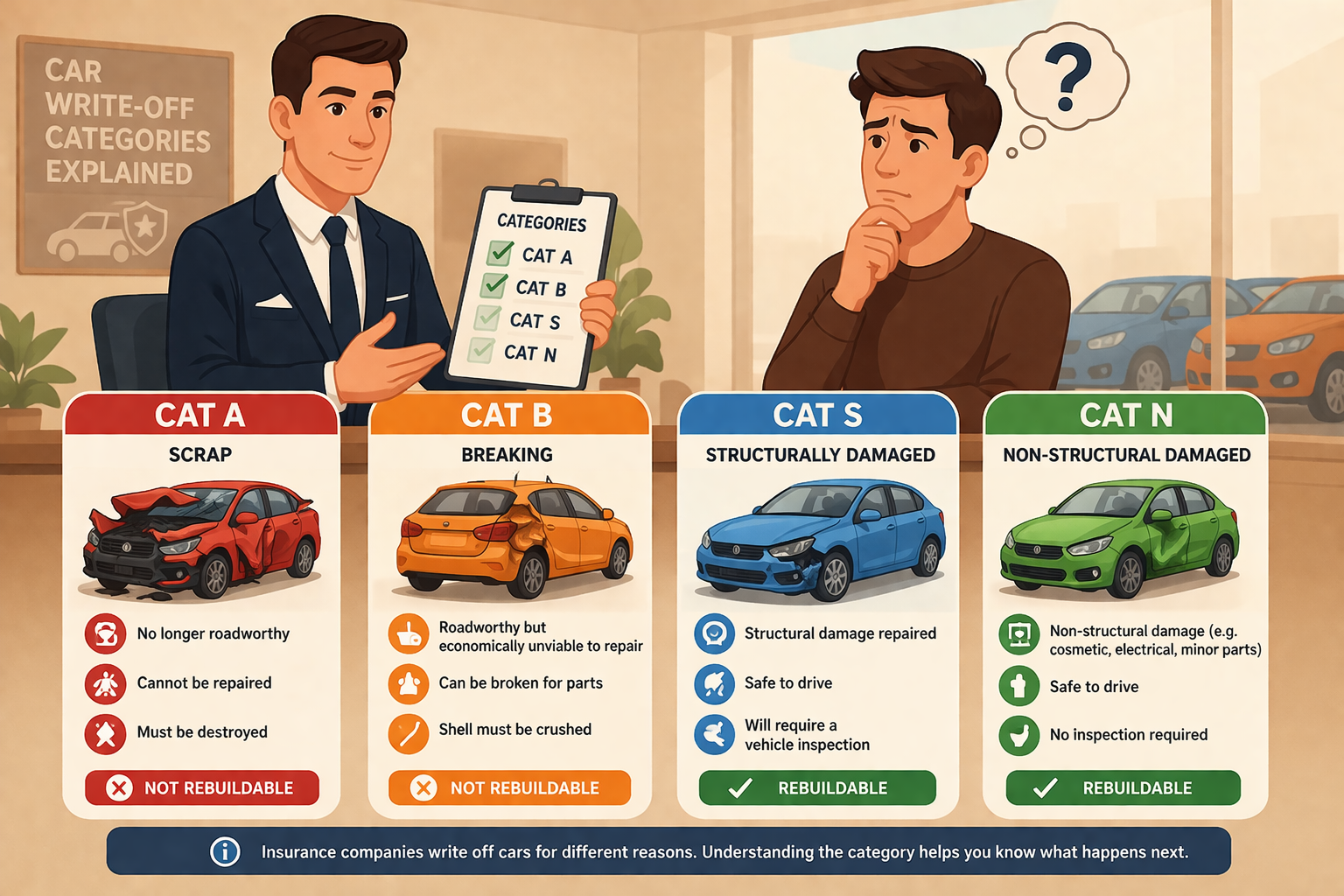
The four current write-off categories
Category A (Cat A) – Scrap only
- Vehicle is completely destroyed
- Cannot be repaired or reused
- Must be crushed entirely
👉 No parts can be salvaged.
Category B (Cat B) – Break for parts
- Severe damage
- Body shell must be destroyed
- Some parts can be salvaged
👉 The car itself will never return to the road.
Category S (Cat S) – Structural damage
- Damage to structural parts (e.g. chassis)
- Can be repaired professionally
- Can return to the road
👉 However, the vehicle’s value is usually reduced.
Category N (Cat N) – Non-structural damage
- No structural damage
- May include cosmetic or electrical issues
- Repairable and roadworthy after repair
👉 Often less serious than Cat S.
Old categories (Cat C and Cat D)
Before 2017, insurers used:
- Cat C → Now replaced by Cat S
- Cat D → Now replaced by Cat N
👉 You may still see these terms used for older vehicles.
How write-off categories affect your payout
Here’s the key point many drivers misunderstand:
👉 Your insurance payout is based on the car’s value BEFORE the accident — not its write-off category.
However:
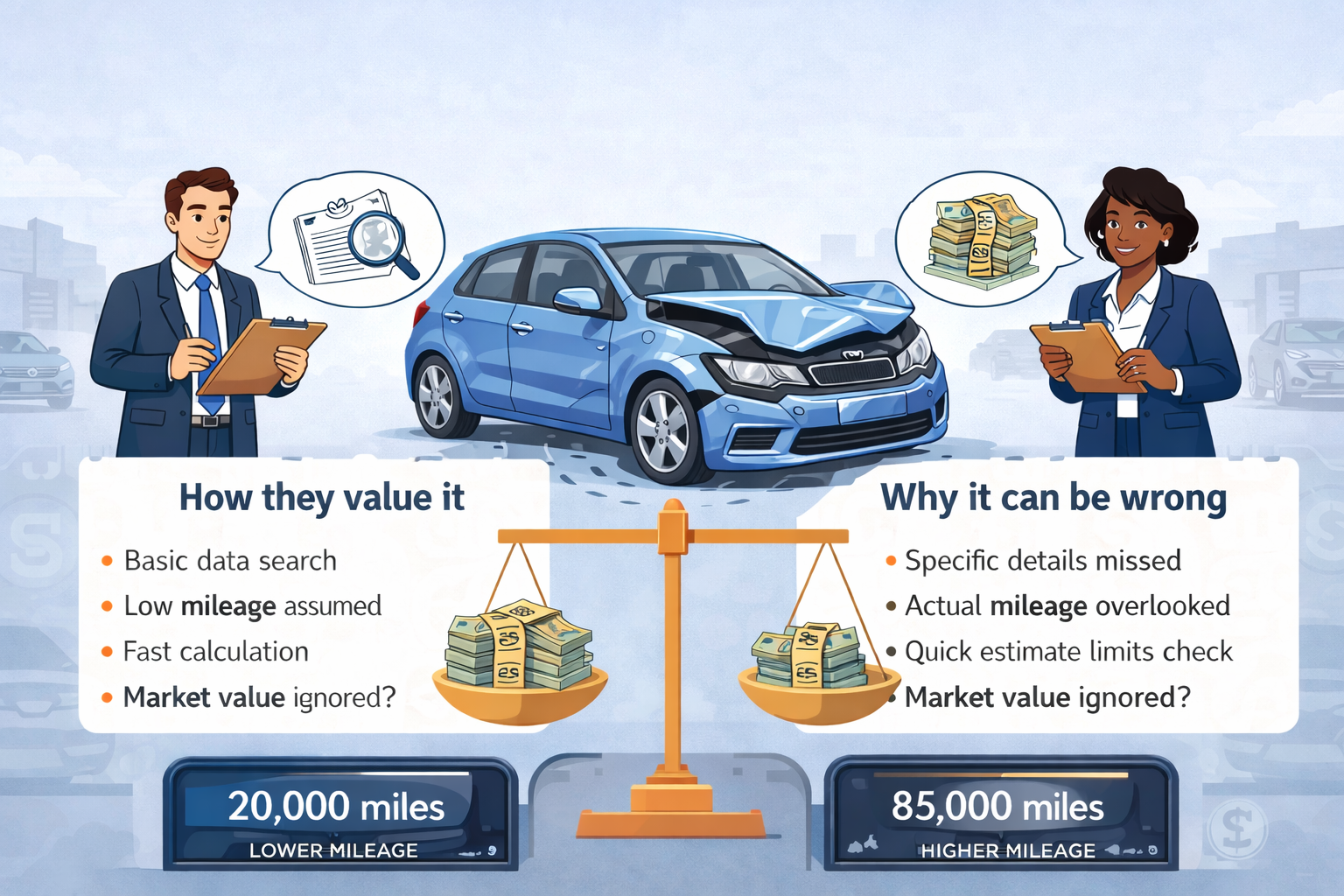
- Severe damage may influence how insurers assess value
- Disputes can arise if valuations don’t reflect true market prices
Common confusion about categories
❌ “Cat S or N means lower payout”
✔ Not necessarily — payout should reflect pre-accident value
❌ “If it’s repairable, it shouldn’t be written off”
✔ Write-offs are based on cost vs value, not just repairability
❌ “The category decides what I’m paid”
✔ The key factor is market value before the incident
Can you keep a written-off car?
In some cases, yes.
If your car is:
- Category S or N, you may be able to buy it back
However:
- Your payout will be reduced
- The car may have lower resale value
How categories affect future value
If a car is repaired and returned to the road:
- Cat S vehicles → Typically lose more value
- Cat N vehicles → Less impact but still recorded
👉 Buyers and insurers will see this history.
What if you disagree with the write-off decision?
You can challenge:
- The valuation of your vehicle
- The insurance payout offered
👉 Even if the category is correct, the payout may still be too low.
Key takeaway
👉 Write-off categories describe the damage — not what you’re entitled to.
If your car has been written off:
- Your payout should reflect its true market value before the incident
- You can challenge the valuation if it’s too low
- The category does not limit your right to a fair settlement
Check if your payout was too low
If your car was written off and your settlement didn’t reflect its true value, you could still be owed money.
✔ No upfront costs
✔ Quick eligibility check
✔ No Win, No Fee
👉 Start your free check today