.svg)
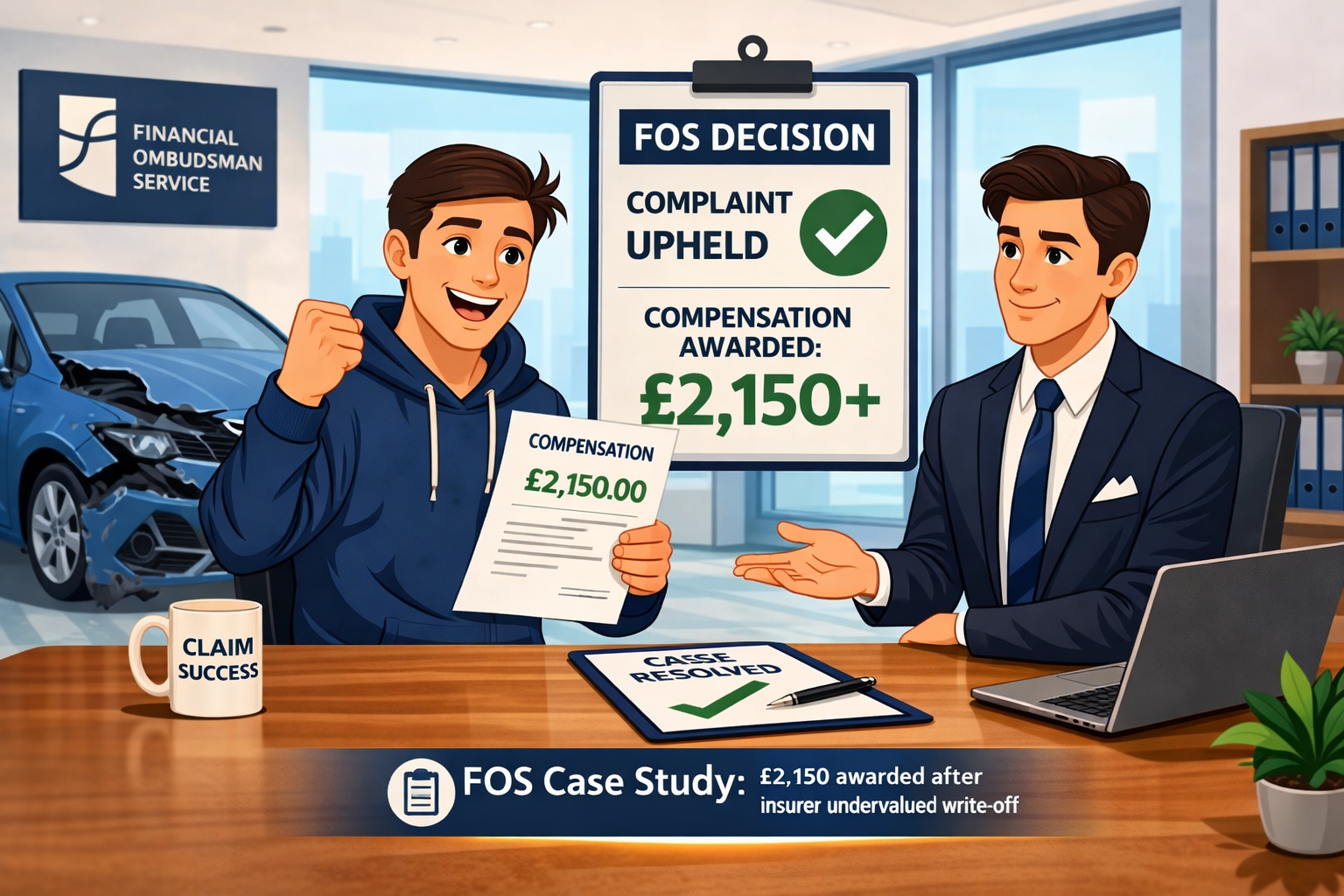

Case Type: Total Loss / Vehicle Write-Off
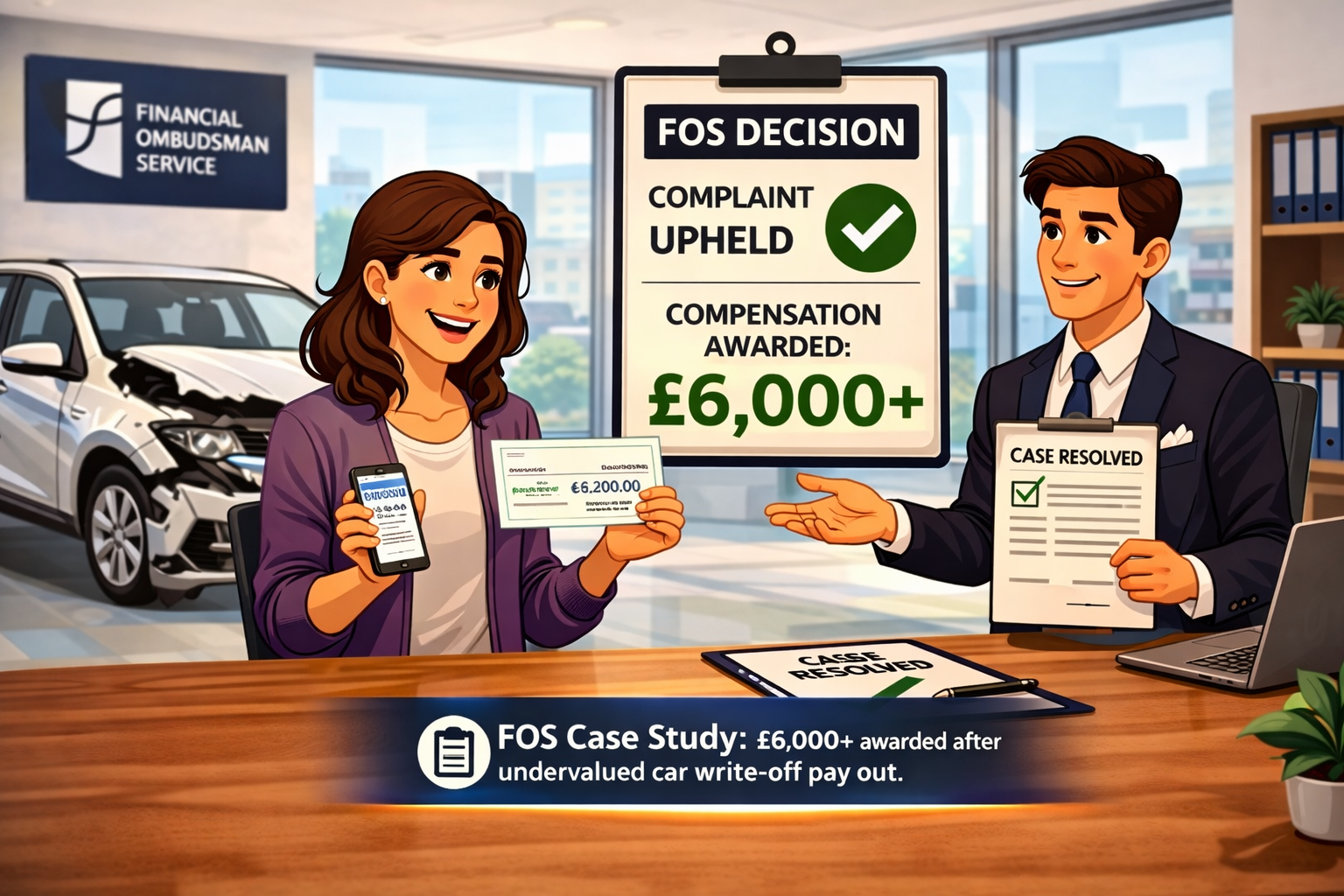
Outcome: Complaint upheld
Additional compensation awarded: £2,150
What happened in this case?
The customer’s vehicle was declared a total loss (write-off) after an accident.
Their insurer calculated a settlement based on the car’s pre-incident market value and issued a payout.
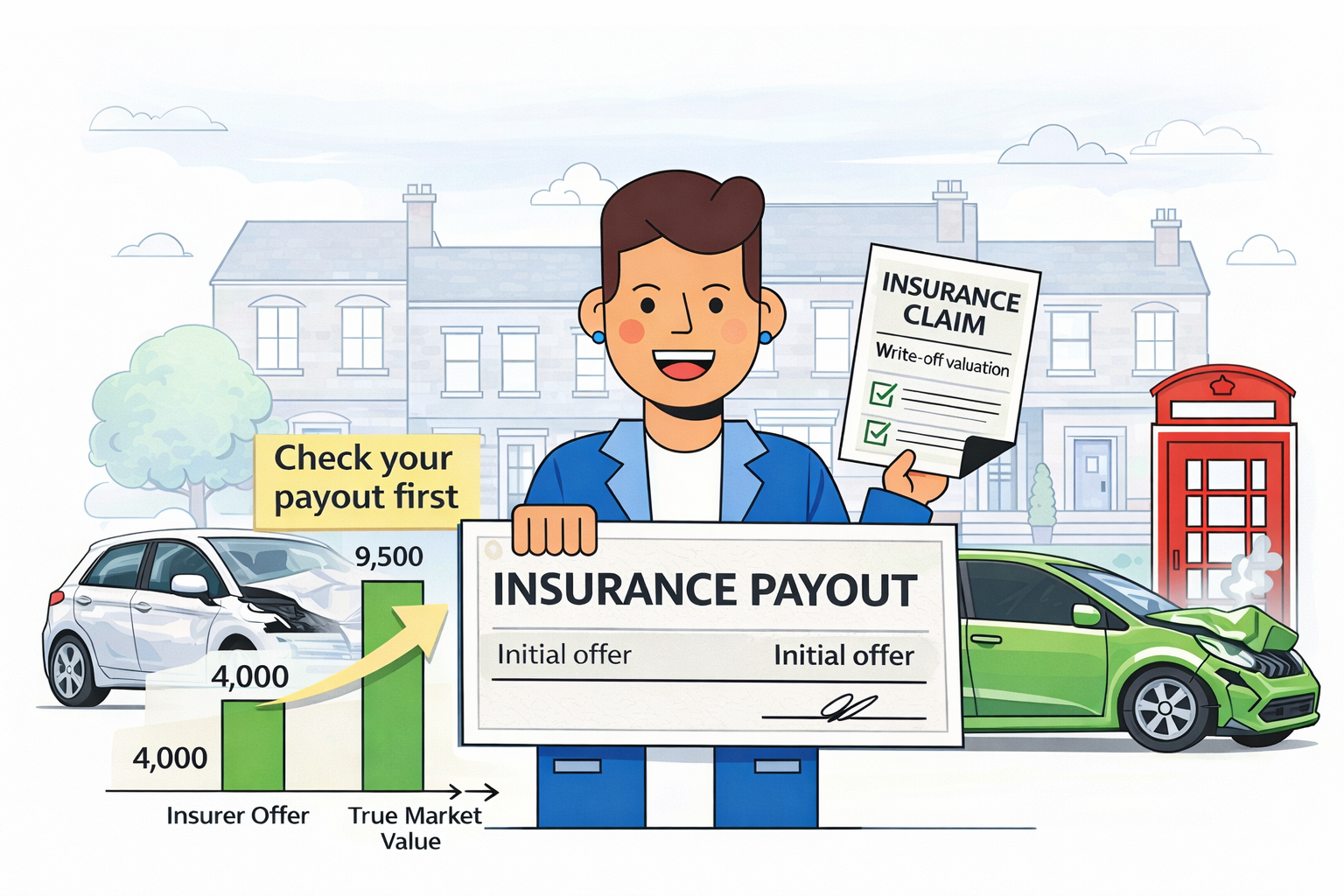
However, the customer believed the amount offered was too low and did not reflect what it would cost to replace the vehicle on the open market.
The issue: undervaluation based on limited data
The dispute focused on how the insurer reached its valuation.
The customer argued that:
- The insurer relied heavily on trade valuation guides only
- The payout did not reflect real retail market prices
- Comparable vehicles available for purchase were significantly more expensive
👉 As a result, the customer could not replace their car with a similar one using the settlement provided.
What evidence was reviewed?
The Financial Ombudsman assessed a range of evidence, including:
- Industry valuation guides (CAP, Glass’s, etc.)
- Online listings for similar vehicles
- Vehicle specification, mileage, and condition
- The insurer’s valuation methodology
The Ombudsman’s key focus was:
👉 What would it cost the customer to buy a like-for-like replacement vehicle?
The Ombudsman’s decision
The complaint was upheld in favour of the customer.
The Ombudsman concluded that:
- The insurer had placed too much weight on trade values
- The valuation did not properly reflect real market conditions
- A higher settlement was required to achieve a fair outcome
The outcome
The insurer was instructed to:
- Increase the payout by £2,150
- Align the settlement with a fair market value
- Ensure the customer was not left financially disadvantaged
Key takeaway from this case
👉 Retail market value matters — not just trade guide prices.
This case highlights:
- Insurers may undervalue cars by relying on lower trade figures
- Real-world listings can provide stronger evidence
- Challenging the valuation can lead to meaningful increases
Why this matters for UK drivers
This is one of the most common types of dispute in the UK.
Many drivers:
- Accept valuations based on guide prices only
- Don’t realise their car may be worth more in the open market
- Miss out on £1,000–£3,000 in additional compensation
👉 If your payout didn’t match real market prices, it may have been too low.
What should you do if your payout seems too low?
If your vehicle has been written off:
- Search for similar vehicles on sites like AutoTrader
- Compare prices with your insurer’s offer
- Gather evidence showing higher values
- Submit a complaint to your insurer
- Escalate to the Financial Ombudsman if needed
What if the insurer says their valuation is “industry standard”?
Even if insurers use recognised tools, the Ombudsman can still rule against them if:
- The valuation doesn’t reflect real market prices
- The data used is incomplete or outdated
- The outcome is not fair and reasonable
👉 “Industry standard” does not automatically mean correct.
Check if you were underpaid
If your car was written off and your payout didn’t reflect what similar cars were selling for, you could still be owed money.
✔ No upfront costs
✔ Quick eligibility check
✔ No Win, No Fee
👉 Start your free check today
Important note
You can complain directly to your insurer and refer your case to the Financial Ombudsman Service for free.